TheBone RoomStart learning

The bones

The spine and pelvis

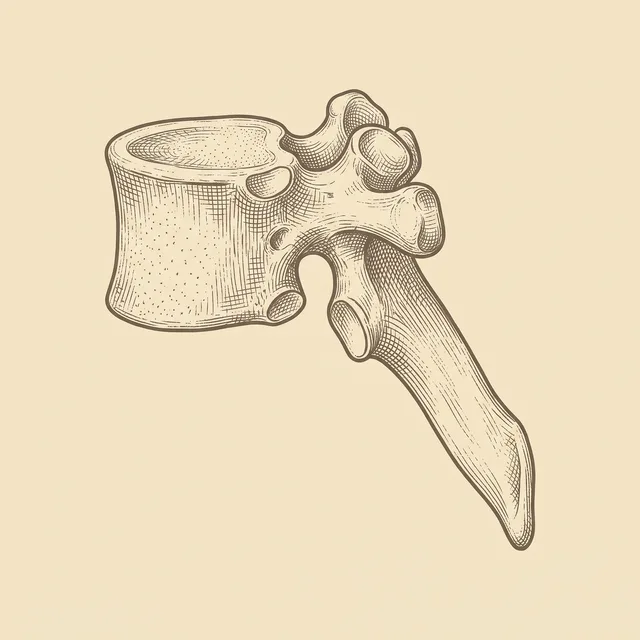
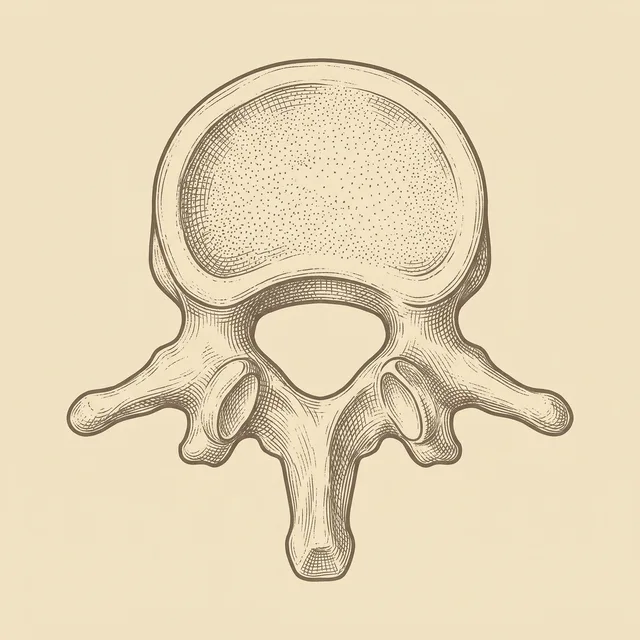
The vertebral column develops as 33 vertebrae and is usually counted as 26 bones in an adult. The first 24 remain separate: seven cervical, 12 thoracic, and five lumbar vertebrae. Five sacral vertebrae fuse into one sacrum, while four small coccygeal vertebrae fuse into the coccyx.

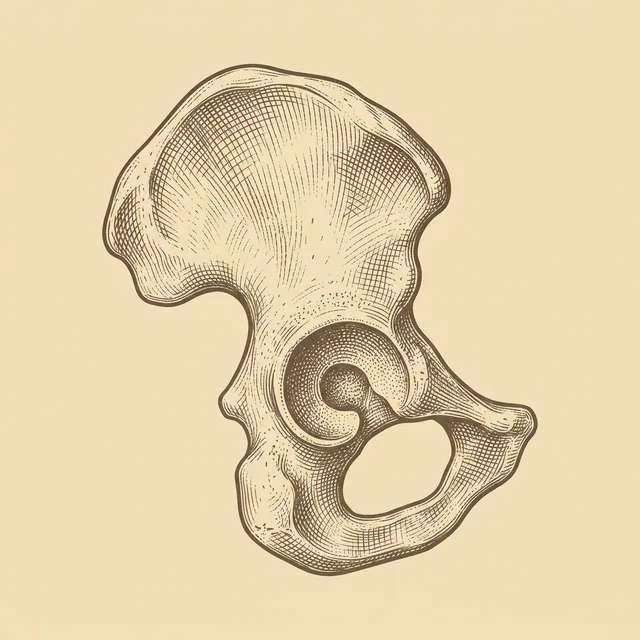
This page also includes the two hip bones, bringing its share of the standard 206 to 28. Each adult hip bone began as three separate bones, the ilium, ischium, and pubis, which grow together during the late teenage years. It is a good corner of the skeleton for seeing that a count depends on age as well as anatomy, because the sacrum and coccyx take much longer to finish fusing.

Most vertebrae make do with a letter and number, but the top two cervical vertebrae have names. C1 is the atlas, holding up the skull in the place where the figure from Greek myth held up the heavens. C2 is the axis, with a bony peg called the dens around which the atlas turns. Together they let the head nod and rotate, which is quite a career for two small bones at the top of a stack.

These 8 entries account for 28 of the 206.How the 206 is counted.

On this page: Try one · Questions · The plates · The specimens · Nearby

01 · Try one

Can you name this one?

This is how the lab asks. A bone you name today comes back a week later to be named again, and that is how it stays known.

Identify the specimen

The vertebrae of the neck, supporting the skull.

7

cervical vertebrae
“neck bones”
In the body7
DescriptionThe vertebrae of the neck, supporting the skull.
Field noteSeven of them, the same number as a giraffe. The first two have names: the atlas holds up your head, the axis lets it turn.

02 · Questions

The questions people ask about these bones.

How many vertebrae are there?

The vertebral column develops as 33 vertebrae. In the standard adult count, there are 24 separate vertebrae plus the sacrum and coccyx, each formed from fused vertebrae. OpenStax, The Vertebral Column

How many bones are in an adult spine?

Twenty-six: 24 separate vertebrae, one sacrum, and one coccyx. The 24 are seven cervical, 12 thoracic, and five lumbar vertebrae. OpenStax, Divisions of the Skeletal System

Why are the first two neck vertebrae called atlas and axis?

C1 is the atlas because it supports the skull, echoing Atlas holding up the heavens in Greek myth. C2 is the axis because the atlas and head rotate around its upward-pointing dens. OpenStax, The Vertebral Column

Is the pelvis one bone?

No. The bony pelvis includes two hip bones, the sacrum, and the coccyx. Each adult hip bone is itself formed when the ilium, ischium, and pubis fuse during the late teenage years. OpenStax, The Pelvic Girdle and Pelvis

03 · The plates

Every specimen with a plate of its own.

04 · The specimens

What each one is called, and how it is counted.

cervical vertebrae

“neck bones”
cervical vertebrae7
In the body7
DescriptionThe vertebrae of the neck, supporting the skull.
Field noteSeven of them, the same number as a giraffe. The first two have names: the atlas holds up your head, the axis lets it turn.
On record
  • Almost all mammals have seven cervical vertebrae, whether the neck belongs to a human, a shrew, or a giraffe. OpenStax 7.3
  • C1 is a ring called the atlas; C2 carries a peg called the dens that acts as the pivot when you turn your head. OpenStax 7.3
  • The long spine of C7 creates the prominent bump you can feel at the base of the neck. OpenStax 7.3
  • An artery supplying the brain climbs through small openings in the cervical vertebrae’s transverse processes. OpenStax 7.3
thoracic vertebrae

“upper back bones”
thoracic vertebrae12
In the body12
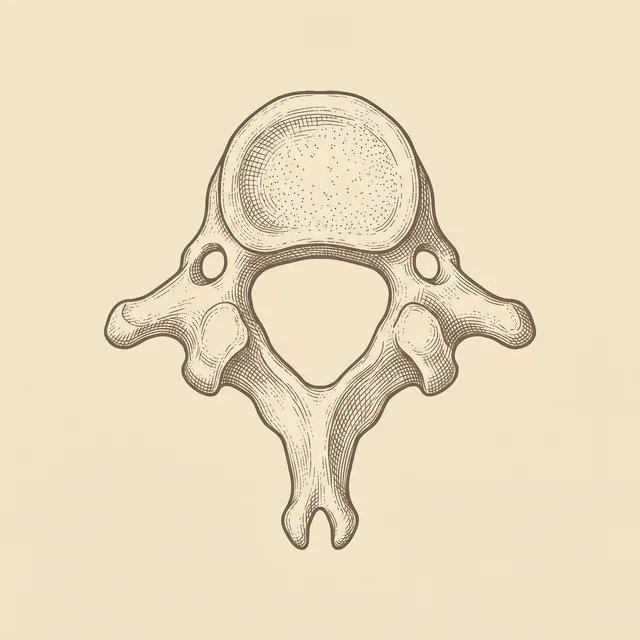
DescriptionThe vertebrae of the upper back, the ones the ribs attach to.
Field noteTwelve of them, one per rib pair. Their attached ribs make this region relatively rigid and stable.
On record
  • Thoracic vertebrae are the only vertebrae equipped with facets specifically for attaching ribs. OpenStax 7.3
  • The thoracic curve is a surviving part of the single curve the spine had before birth. OpenStax 7.3

lumbar vertebrae

“lower back bones”
lumbar vertebrae5
In the body5
DescriptionThe large vertebrae of the lower back.
Field noteOnly five, but they are the biggest vertebrae. They carry most of your upper body’s weight, which is why lower backs complain so much.
On record
  • Lumbar vertebrae have the thickest bodies because they carry more weight than the vertebrae above them. OpenStax 7.3
  • The lumbar curve is not present in the original fetal spine; it develops as a child learns to stand and walk. OpenStax 7.3

sacrum

plural: sacra
“base of the spine”
sacrum1
In the body1
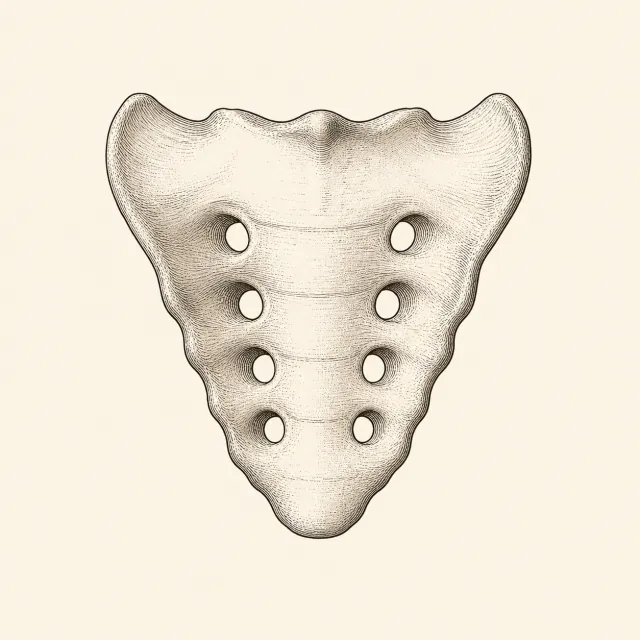
DescriptionTriangular bone at the base of the spine, wedged between the two hip bones.
Field noteIt starts life as five separate vertebrae that begin fusing together after age 20, one solid bone by middle age.
On record
  • The sacrum begins as five vertebrae, and their fusion does not start until after about age 20. OpenStax 7.3
  • Four ridges on the front of an older adult sacrum mark where its five original vertebrae fused. OpenStax 7.3
  • The paired holes in the sacrum are exits for branches of the sacral spinal nerves. OpenStax 7.3

coccyx

plural: coccyges
“tailbone”
coccyx1
In the body1
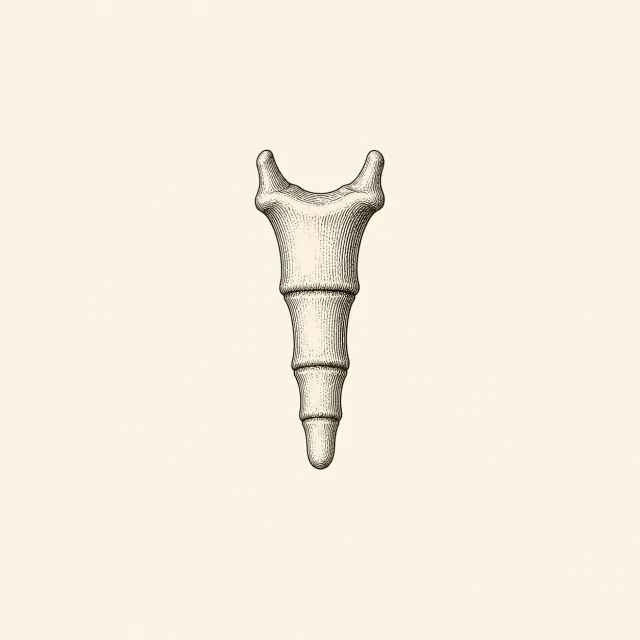
DescriptionThe small bone at the very bottom tip of the spine.
Field noteFormed from three to five tiny coccygeal vertebrae, with considerable variation in how many are fused. Its name is Greek for "cuckoo," after the bird’s beak shape.
On record
  • The coccyx usually represents four very small vertebrae fused into one tailbone. OpenStax 7.3
  • The coccyx bears no weight while you stand, but it can take some load when you sit. OpenStax 7.3

hip bone

plural: hip bones
“pelvis (each side)”
hip bone2 (left + right)
In the body2 (left + right)
DescriptionLarge, curved bone forming one side of the pelvis.
Field noteEach adult hip bone forms from the ilium, ischium, and pubis, which fuse during the late teenage years and remain as three named regions. Its pelvic features make it the most reliable bone for estimating sex.
On record
  • Each adult hip bone began as three bones, the ilium, ischium, and pubis, that fused in the late teenage years. OpenStax 8.3
  • The rough ischial tuberosities are the parts of the hip bones that carry your weight when you sit. OpenStax 8.3
  • All three regions of a hip bone meet at the acetabulum, the deep socket for the femoral head. OpenStax 8.3

atlas

plural: atlases
atlas1
In the body1
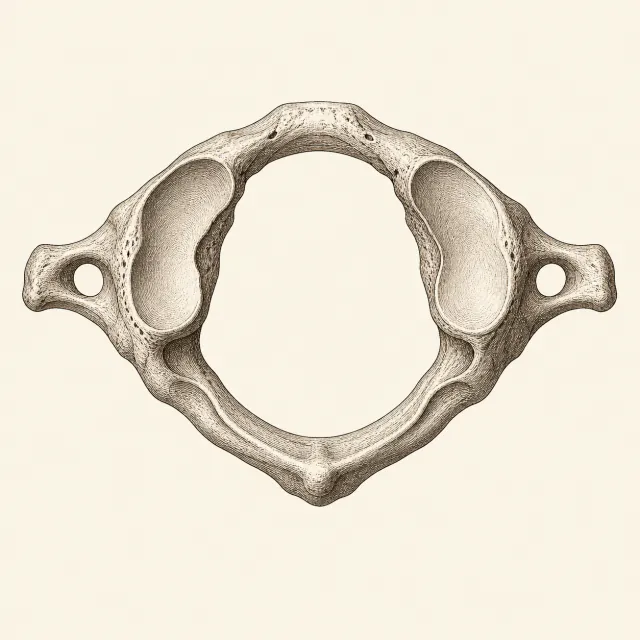
DescriptionA ring-shaped vertebra directly beneath the skull, with neither a body nor a spinous process.
Field noteAlso called C1, it takes its name from Atlas, the figure in Greek mythology who supported the heavens: this ring-shaped vertebra supports the skull.
On record
  • Unlike most vertebrae, the atlas has neither a vertebral body nor a spinous process. It is built as a ring. OpenStax 7.3
  • The joint between the atlas and the skull produces much of the nodding movement used to signal “yes.” StatPearls

axis

plural: axes
axis1
In the body1
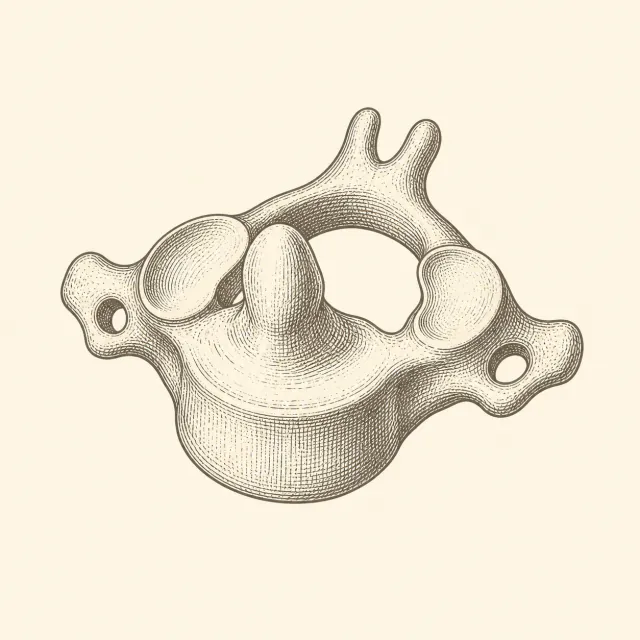
DescriptionThe neck vertebra with a tooth-like dens projecting upward to act as a pivot for head rotation.
Field noteAlso called C2, it carries the dens that acts as the pivot for the first neck vertebra; together, their joint supplies about half of the neck’s rotation.
On record
  • The tooth-like dens of the axis acts as the pivot around which the atlas turns. StatPearls
  • A strong transverse ligament holds the dens against the atlas while still allowing the head to rotate. OpenStax 7.3

05 · Learn them

Reading them is not the same as knowing them.

In the lab these are Case 04, The Spine & Pelvis, on the Explorer track. Case 11, The Named Vertebrae come later, on the Scholar track.

It introduces bones a few at a time, asks where they are, and comes back days later to check they stayed.

Start with theseBegin with four bones. It’s free, and you don’t need an account.

Nearby: arm and shoulder · leg · rib cage · hand · wrist · foot and ankle · skull · ear · all nine