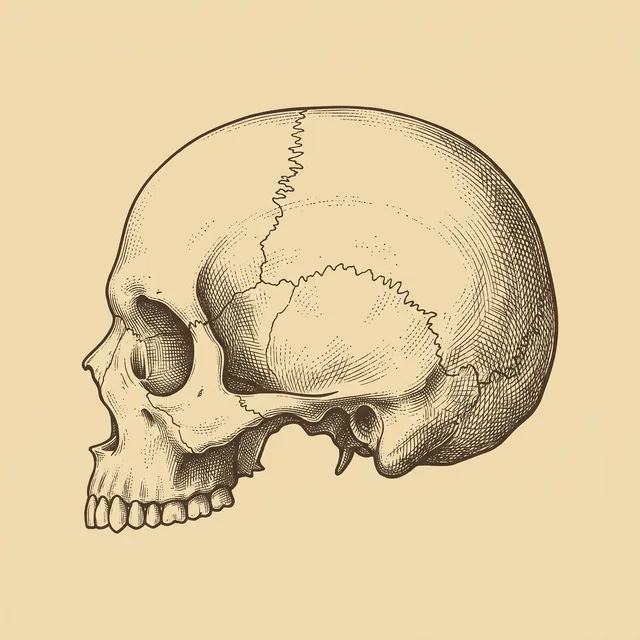
The adult skull has 22 bones: eight in the braincase and 14 in the face. Add the hyoid and the six tiny ear ossicles, which are associated with the head but not counted as part of the skull, and the wider head count becomes 29.
This page stays with the 22 skull bones and the hyoid. It has 16 learning entries because The Bone Room first introduces the eight-bone braincase as the cranium, then returns later to open it up into the frontal, parietal, temporal, occipital, sphenoid, and ethmoid bones. Paired bones explain why six names can still make eight physical bones. The ear's malleus, incus, and stapes have a page of their own.
Almost every skull bone is locked to its neighbors by an immovable joint called a suture. The mandible is the exception, hanging below as the only skull bone that moves. The hyoid is stranger still. It sits in the upper neck, suspended by muscles and ligaments, and does not contact another bone at all. The Bone Room keeps it with the head because that is where you would go looking for this small, U-shaped support for the tongue and throat.
This is how the lab asks. A bone you name today comes back a week later to be named again, and that is how it stays known.
Identify the specimen
The domed case of bone that encloses and protects the brain.
8 cranial bones, joined into one case
cranium
plural: crania
“braincase”
In the body8 cranial bones, joined into one case
DescriptionThe domed case of bone that encloses and protects the brain.
Field noteEight bones meet along interlocking fibrous joints called sutures. In an infant the gaps between them are still soft, and those gaps are the fontanelles.
Identify the specimen
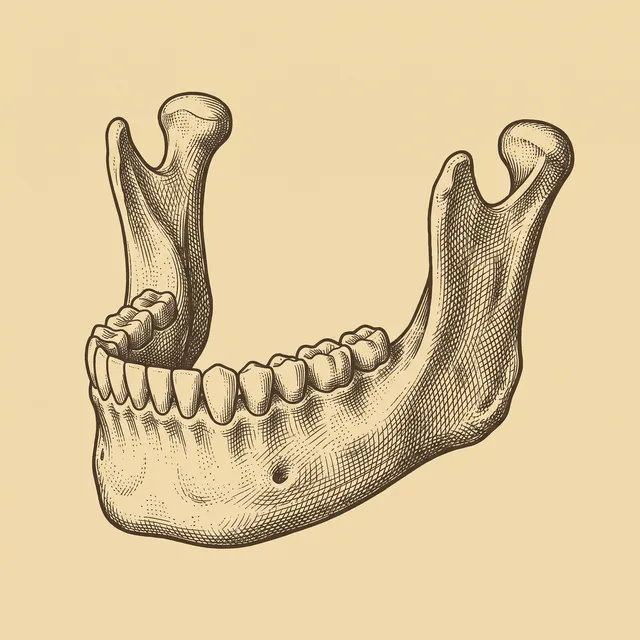
The bone holding the lower teeth.
1
mandible
plural: mandibles
“lower jawbone”
In the body1
DescriptionThe bone holding the lower teeth.
Field noteThe largest, strongest bone of the face, and the only bone of the skull that moves.
Identify the specimen
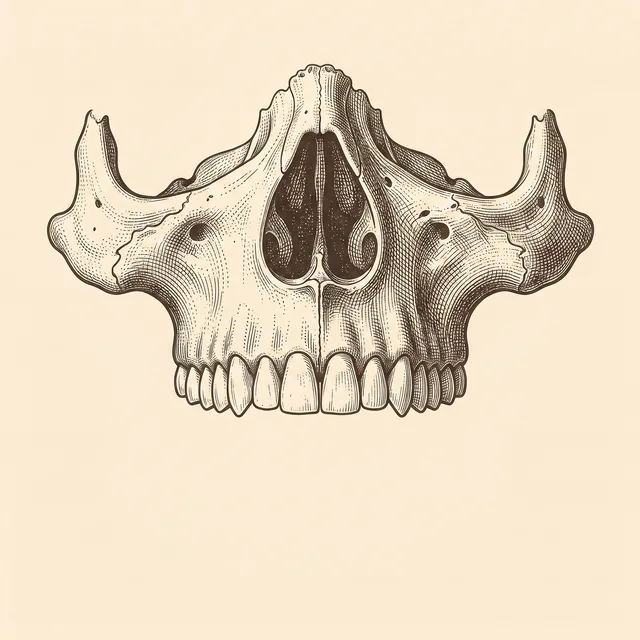
The bone holding the upper teeth, forming the center of the face.
2 (joined at the midline)
maxilla
plural: maxillae
“upper jaw”
In the body2 (joined at the midline)
DescriptionThe bone holding the upper teeth, forming the center of the face.
Field noteReally a pair of bones joined at the midline. It forms most of the hard palate, the roof of your mouth, and part of the floor of each eye socket.
Identify the specimen
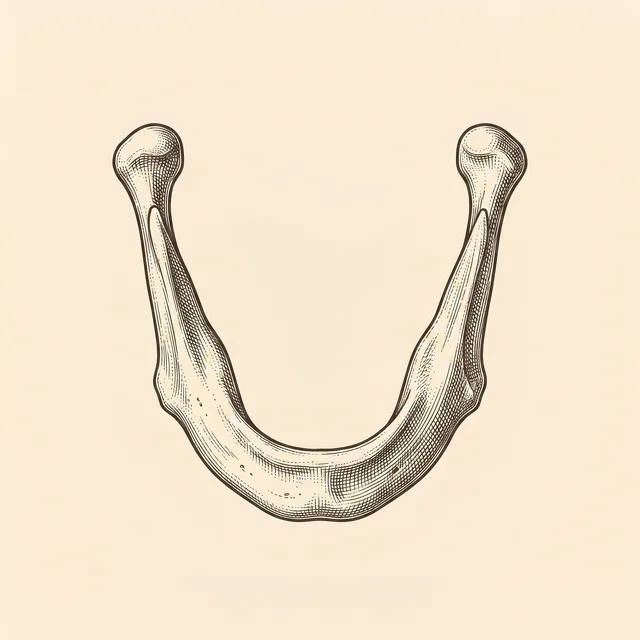
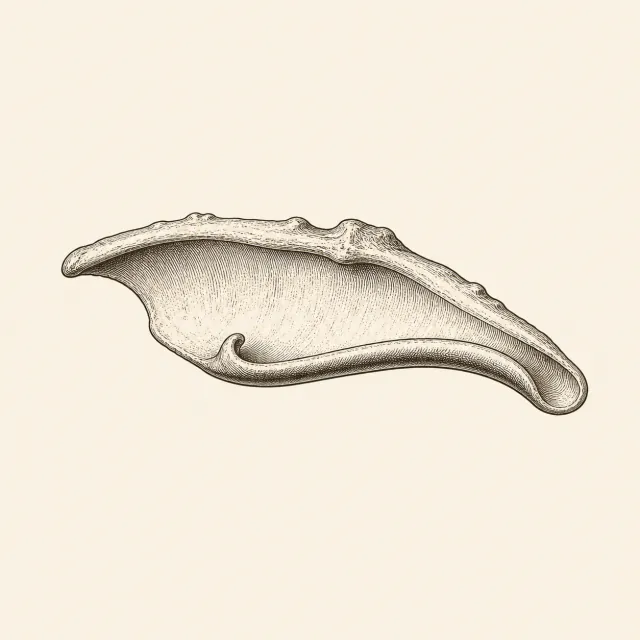
Small U-shaped bone in the throat, above the voice box.
1
hyoid
plural: hyoids
“throat bone”
In the body1
DescriptionSmall U-shaped bone in the throat, above the voice box.
Field noteThe only bone in the body that touches no other bone. It hangs from muscles and ligaments. In forensics, a fracture can be an important clue in suspected strangulation, although other neck trauma can also cause it.
Identify the specimen
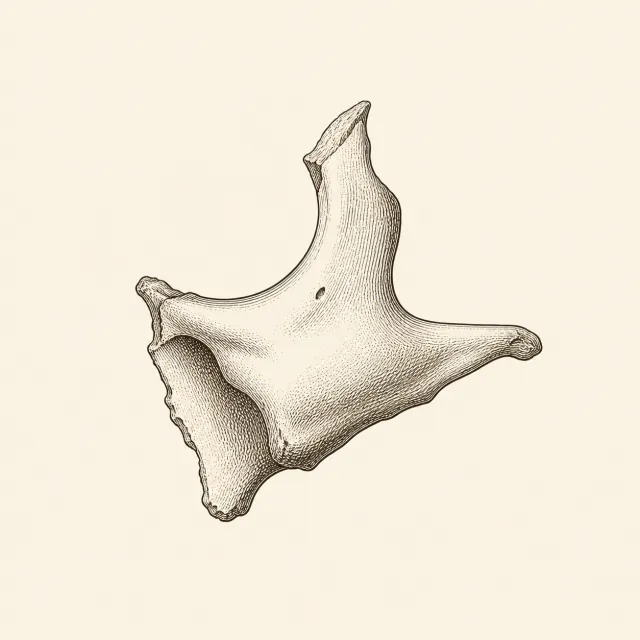
Forms the prominence of the cheek and the outer rim of the eye socket.
2 (left + right)
zygomatic bone
plural: zygomatic bones
“cheekbone”
In the body2 (left + right)
DescriptionForms the prominence of the cheek and the outer rim of the eye socket.
Field noteIt sends a slender arch back toward the ear. Rest a finger there and clench your jaw: the muscle you feel bulging runs underneath that arch.
02 · Questions
The questions people ask about these bones.
How many bones are in the skull?
Twenty-two in an adult: eight braincase bones and 14 facial bones. The hyoid and six ear ossicles are associated with the head but sit outside the skull count, taking the broader total to 29. OpenStax, Divisions of the Skeletal System
Which is the only movable bone of the skull?
The mandible, or lower jaw. The other 21 skull bones are joined into one largely immobile unit. OpenStax, The Skull
Does the hyoid touch any other bone?
No. The hyoid sits in the upper neck and is held in position by muscles. It does not contact another bone, which is why OpenStax treats it as independent from the skull. OpenStax, The Skull
What are sutures?
Sutures are the immovable joints between neighboring skull bones. The major ones include the coronal, sagittal, lambdoid, and squamous sutures, each named for its position or shape. OpenStax, The Skull
DescriptionThe domed case of bone that encloses and protects the brain.
Field noteEight bones meet along interlocking fibrous joints called sutures. In an infant the gaps between them are still soft, and those gaps are the fontanelles.
On record
The braincase is built from eight bones joined mostly by immovable fibrous joints called sutures. OpenStax 7.2
The floor of the braincase is crowded with openings that carry cranial nerves, blood vessels, and the spinal cord. OpenStax 7.2
mandible
plural: mandibles
“lower jawbone”
mandible1
In the body1
DescriptionThe bone holding the lower teeth.
Field noteThe largest, strongest bone of the face, and the only bone of the skull that moves.
On record
The mandible is the only movable bone of the skull. OpenStax 7.2
At birth the mandible has left and right halves; they fuse into one U-shaped bone during the first year. OpenStax 7.2
maxilla
plural: maxillae
“upper jaw”
maxilla2 (joined at the midline)
In the body2 (joined at the midline)
DescriptionThe bone holding the upper teeth, forming the center of the face.
Field noteReally a pair of bones joined at the midline. It forms most of the hard palate, the roof of your mouth, and part of the floor of each eye socket.
On record
The paired maxillae form the upper jaw, much of the hard palate, and part of each eye socket. OpenStax 7.2
Every upper tooth sits in a deep socket, an alveolus, inside the maxilla’s alveolar process. OpenStax 7.2
hyoid
plural: hyoids
“throat bone”
hyoid1
In the body1
DescriptionSmall U-shaped bone in the throat, above the voice box.
Field noteThe only bone in the body that touches no other bone. It hangs from muscles and ligaments. In forensics, a fracture can be an important clue in suspected strangulation, although other neck trauma can also cause it.
On record
The hyoid is the only bone that does not form a joint with another bone; muscles and ligaments suspend it in the neck. OpenStax 7.2
This small floating bone helps coordinate movements used for speaking and swallowing. StatPearls
zygomatic bone
plural: zygomatic bones
“cheekbone”
zygomatic bone2 (left + right)
In the body2 (left + right)
DescriptionForms the prominence of the cheek and the outer rim of the eye socket.
Field noteIt sends a slender arch back toward the ear. Rest a finger there and clench your jaw: the muscle you feel bulging runs underneath that arch.
On record
The zygomatic bone builds both the prominence of the cheek and much of the outer wall of the eye socket. OpenStax 7.2
The cheek arch is a two-bone bridge: the zygomatic and temporal bones meet in the middle. OpenStax 7.2
nasal bone
plural: nasal bones
“bridge of the nose”
nasal bone2 (left + right)
In the body2 (left + right)
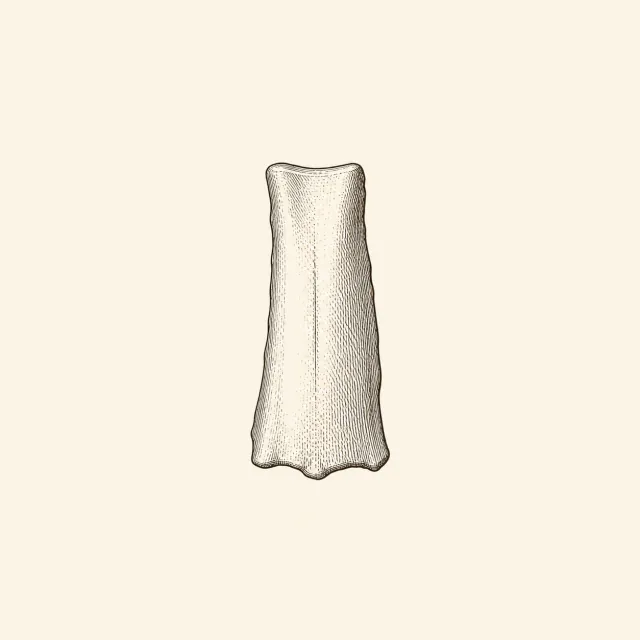
DescriptionTwo small oblong bones meeting in the midline to form the hard upper part of the nose.
Field noteOnly the upper part of your nose is bone; everything below it is cartilage. That is why noses tend to squash and spring back rather than snap.
On record
The paired nasal bones form only the hard bridge of the nose; they support cartilage that continues below. OpenStax 7.2
These small bridge bones are the bones usually damaged when the nose is broken. OpenStax 7.2
lacrimal bone
plural: lacrimal bones
“tear bone”
lacrimal bone2 (left + right)
In the body2 (left + right)
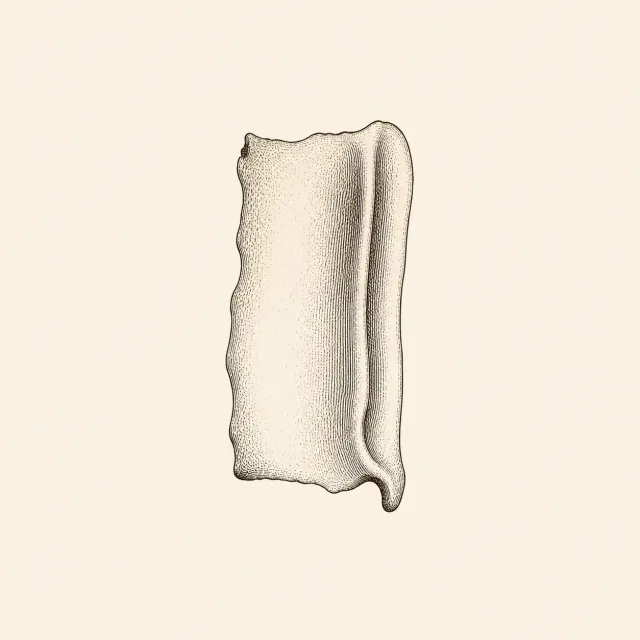
DescriptionThe smallest bone of the face, set into the inner wall of each eye socket, carrying a groove for tears.
Field noteNamed from the Latin for tears. Its groove begins the channel that drains the eye into the nose, the reason a good cry makes your nose run.
On record
The lacrimal bone is a tiny rectangle on the inner wall of the eye socket. OpenStax 7.2
Tears drain toward a bony channel beside the lacrimal bone and eventually reach the nasal cavity: why crying can make your nose run. StatPearls
palatine bone
plural: palatine bones
“back of the roof of the mouth”
palatine bone2 (left + right)
In the body2 (left + right)
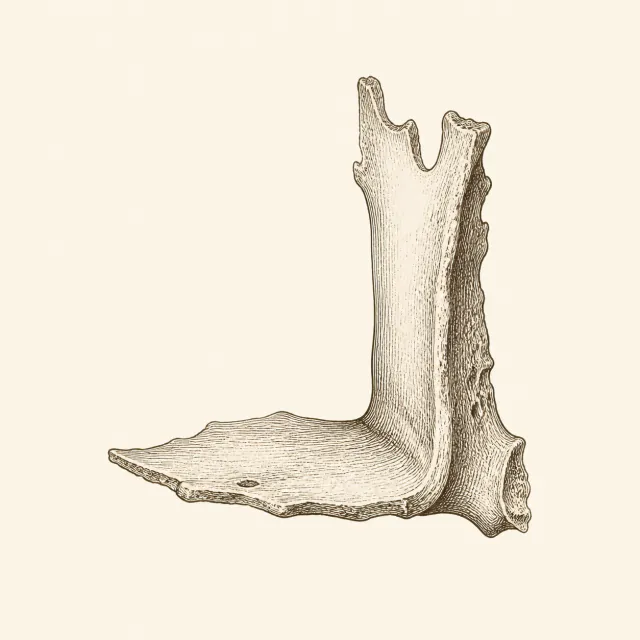
DescriptionAn L-shaped pair forming the rear portion of the roof of the mouth and part of the floor of each eye socket.
Field noteThe roof of your mouth is a two-bone job: the upper jaw lays the front, this pair closes the back. When they fail to meet before birth the result is a cleft palate.
On record
The paired palatine bones make the back quarter of the hard palate. OpenStax 7.2
A palatine bone contributes not only to the mouth, but also to the nasal cavity and a small part of the eye socket. OpenStax 7.2
inferior nasal concha
plural: inferior nasal conchae
“scroll bone of the nose”
inferior nasal concha2 (left + right)
In the body2 (left + right)
DescriptionA curled, shelf-like bone on each side wall inside the nose, stirring the air you breathe in.
Field noteEach is a delicate curl that warms and moistens incoming air. It is why breathing through your nose is kinder to your lungs than breathing through your mouth.
On record
The inferior nasal concha is a bone in its own right; the middle and superior conchae belong to the ethmoid bone. OpenStax 7.2
The nasal conchae help steer inhaled air across warm, moist lining before it travels toward the lungs. StatPearls
vomer
plural: vomers
“nose divider”
vomer1
In the body1
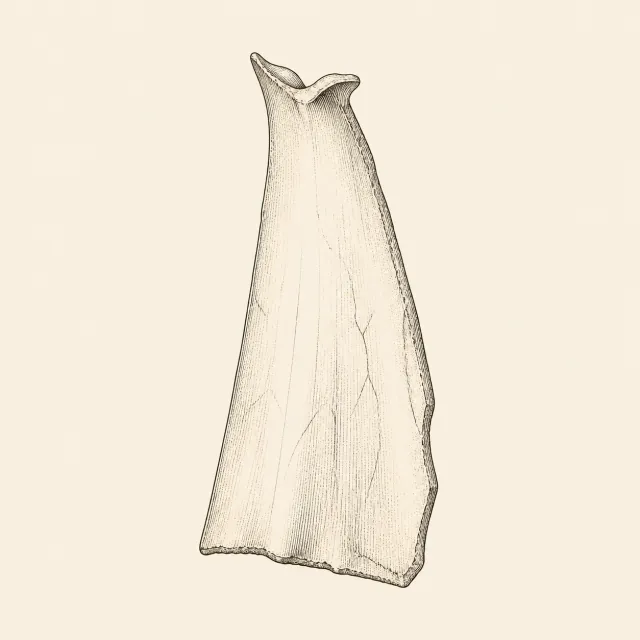
DescriptionA thin flat blade standing on edge in the midline, forming the lower part of the wall between the nostrils.
Field noteIts name is Latin for plowshare, which is exactly what the blade looks like. It is one of the few skull bones that is single rather than paired.
On record
The vomer is a single thin bone forming the lower, rear portion of the nasal septum. OpenStax 7.2
From the front, only a little vomer is visible; viewed from behind, it rises through the full height of the bony septum. OpenStax 7.2
frontal bone
plural: frontal bones
“forehead bone”
frontal bone1
In the body1
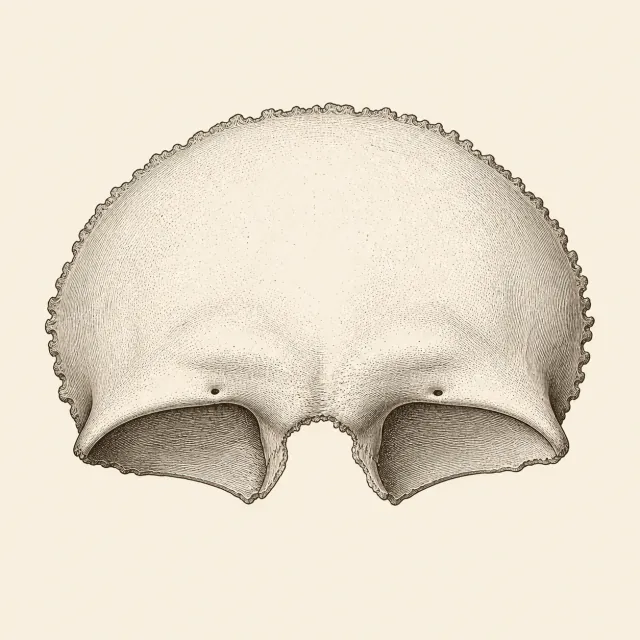
DescriptionForms the forehead and the upper rim of both eye sockets.
Field noteA single bone spanning the forehead. It also roofs both eye sockets and holds air-filled sinuses just above the brows, the ones that ache with a cold.
On record
The frontal bone forms the forehead and also roofs both eye sockets. OpenStax 7.2
Air-filled frontal sinuses sit inside the frontal bone just above the eyebrows. OpenStax 7.2
parietal bone
plural: parietal bones
“top of the head”
parietal bone2 (left + right)
In the body2 (left + right)
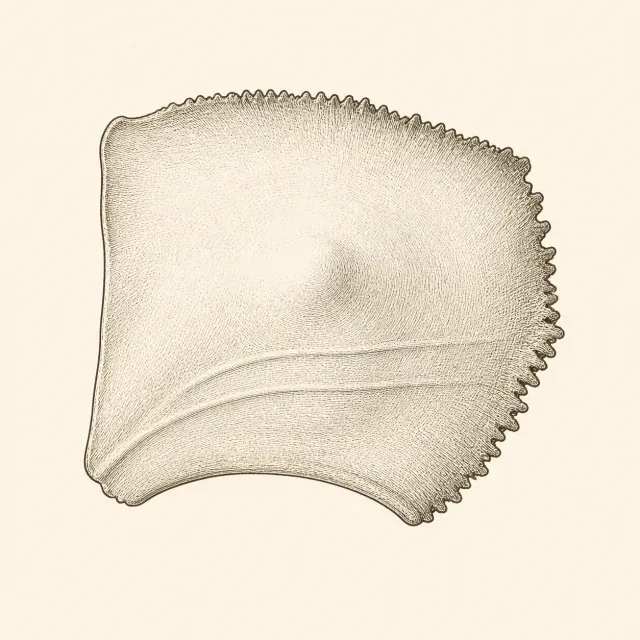
DescriptionA matched pair forming most of the roof and upper sides of the braincase.
Field noteThe pair meet each other along the top of the head at the sagittal suture, and meet the forehead bone in front at the coronal suture.
On record
The two parietal bones form most of the roof and upper sides of the braincase. OpenStax 7.2
The parietal pair meet each other at the sagittal suture and meet the frontal bone at the coronal suture. OpenStax 7.2
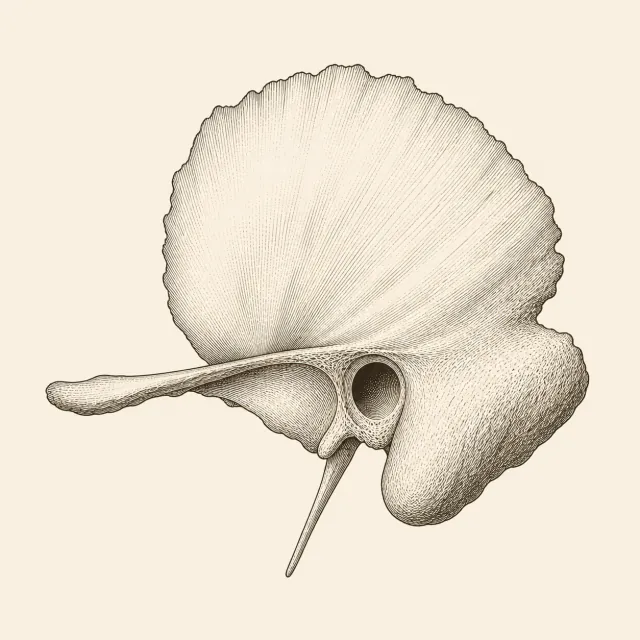
temporal bone
plural: temporal bones
“temple bone”
temporal bone2 (left + right)
In the body2 (left + right)
DescriptionA pair low on each side of the braincase, each one housing the middle and inner ear.
Field noteEach shelters the hearing apparatus (the three ossicles sit inside it) and carries the socket where the lower jaw hinges.
On record
Each temporal bone houses the middle- and inner-ear structures and provides the socket for the moving jaw. OpenStax 7.2
A major artery reaches the brain through a winding tunnel, the carotid canal, inside the temporal bone. OpenStax 7.2
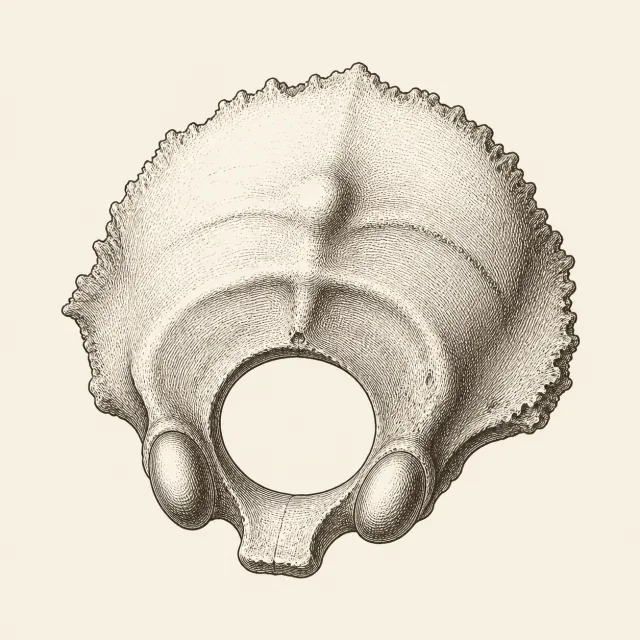
occipital bone
plural: occipital bones
“back of the head”
occipital bone1
In the body1
DescriptionForms the back and base of the braincase, pierced by the large opening the spinal cord passes through.
Field noteThat large opening is the foramen magnum. The two rounded knobs beside it rest on the first neck vertebra, and rock on it every time you nod.
On record
The foramen magnum in the occipital bone is the skull’s largest opening and connects the brain with the spinal cord. StatPearls
Rounded occipital condyles beside that opening rest on the atlas, the first cervical vertebra. StatPearls
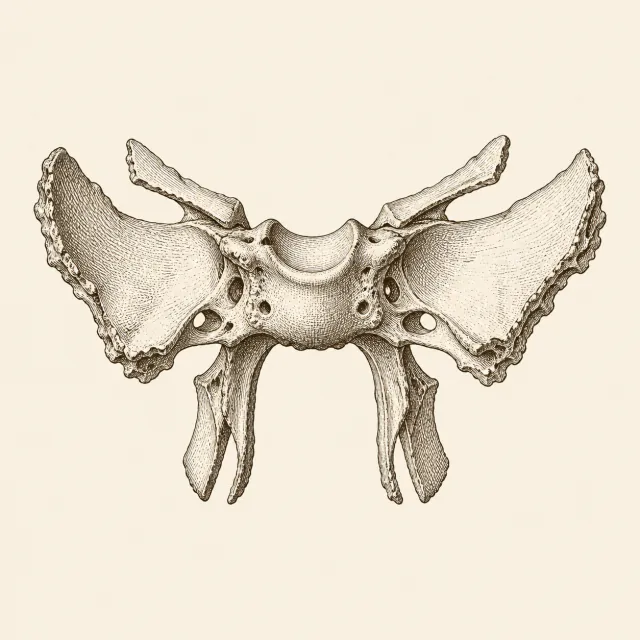
sphenoid bone
plural: sphenoid bones
“butterfly bone”
sphenoid bone1
In the body1
DescriptionA single wing-shaped bone spanning the floor of the braincase, in contact with almost every other bone of the skull.
Field noteShaped like a butterfly with its wings spread. A saddle-shaped hollow at its center cradles the pituitary gland.
On record
The sphenoid is a skull “keystone” because it joins with almost every other skull bone. OpenStax 7.2
A saddle-shaped hollow in the sphenoid, the sella turcica, cradles the pituitary gland. StatPearls
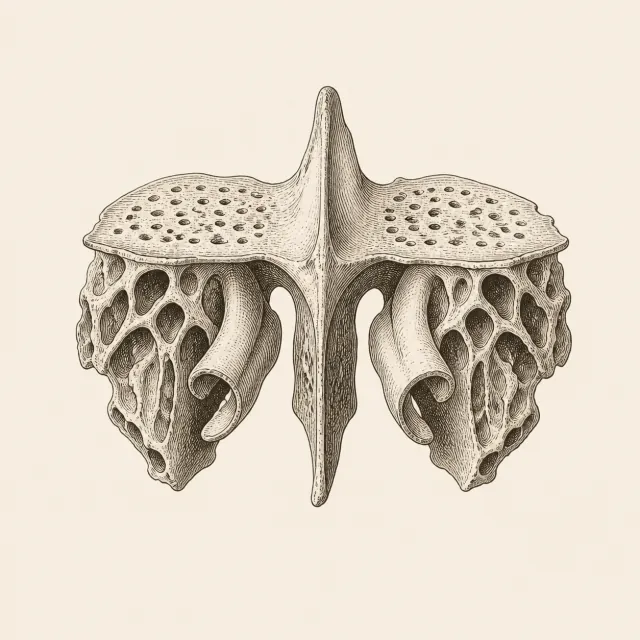
ethmoid bone
plural: ethmoid bones
“sieve bone”
ethmoid bone1
In the body1
DescriptionA light, spongy bone set deep between the eye sockets, forming the roof of the nasal cavity.
Field noteGreek for sieve: its perforated plate lets the nerve fibers of smell pass from the nose up into the brain. It also forms the upper scrolls inside the nose.
On record
Smell fibers pass through the ethmoid’s perforated cribriform plate on their way from the nose to the brain. StatPearls
The ethmoid contains many small air-filled cells between the upper nose and the inner walls of the eye sockets. OpenStax 7.2
05 · Learn them
Reading them is not the same as knowing them.
In the lab these are Case 07, The Head & Throat, on the Explorer track. Case 08, The Facial Bones and Case 10, The Braincase Bones come later, on the Scholar track.
It introduces bones a few at a time, asks where they are, and comes back days later to check they stayed.
Start with theseBegin with four bones. It’s free, and you don’t need an account.