The story
A more enjoyable way to learn the bones.
The Bone Room turns an intimidating skeleton into short, curious examinations, a few specimens at a time.
01 · Curiosity is enough
Curiosity should be enough to start.
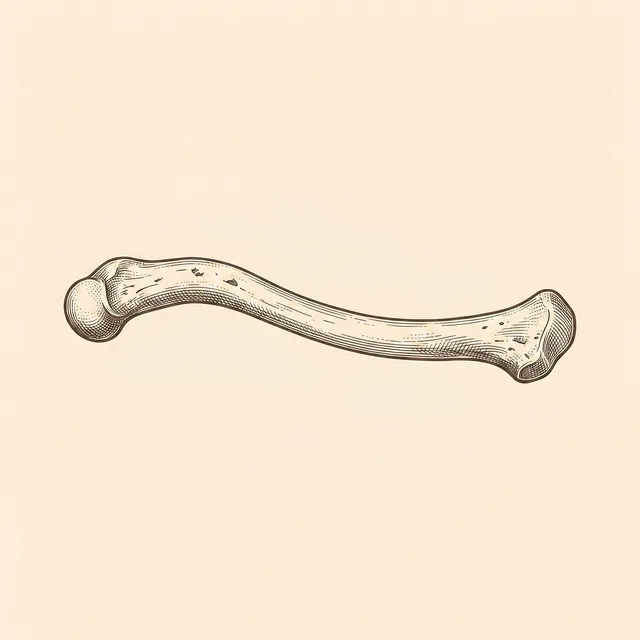
Wanting to know what a bone is called is a perfectly good reason to find out. But many anatomy resources are designed for formal study, or present the skeleton as 206 words to memorize. The Bone Room starts somewhere simpler, with the curiosity itself.
Here you need none. Your first specimens are the big, familiar bones you could point to on your own arm, and each one arrives with the name you already use beside its proper one, the collarbone before the clavicle. The tiny bones come much later, once the large ones are in your archive. It is free, it opens in a browser, and you can begin without an account.
02 · Recognizing is not remembering
A quiz you pass is not a name you keep.
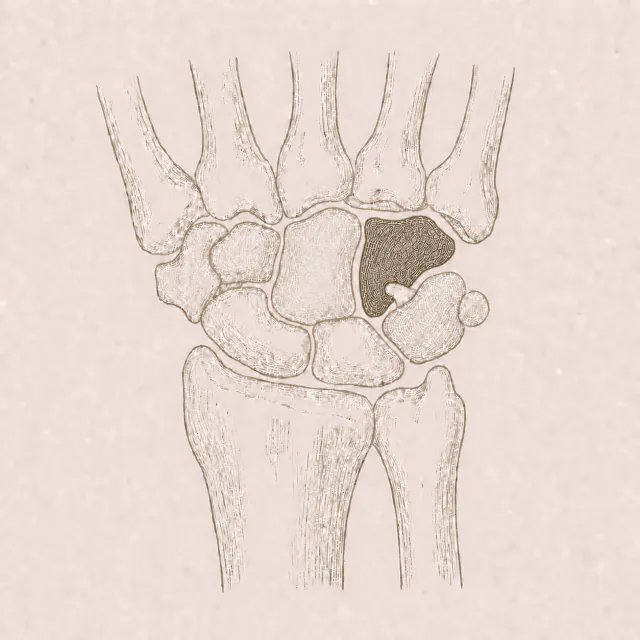
Picking the right label out of four is a much lower bar than producing the name yourself, and it is the ease of that recognition which convinces you the work is done. That is why a quiz can feel so good on a Tuesday and leave nothing behind by the weekend.
So the lab spaces each encounter across days. You meet a specimen and recognize it, then meet it again tomorrow, because only one correct answer per bone counts in a day. It is cataloged once you have named it on three separate days, the last of them typed from memory rather than chosen from a list. After that it returns as a cold case, with longer gaps each time the name is still there. The archive holds what you can still retrieve, rather than what you once got right.
03 · A few at a time
A few specimens at a time, with nothing to catch up on.
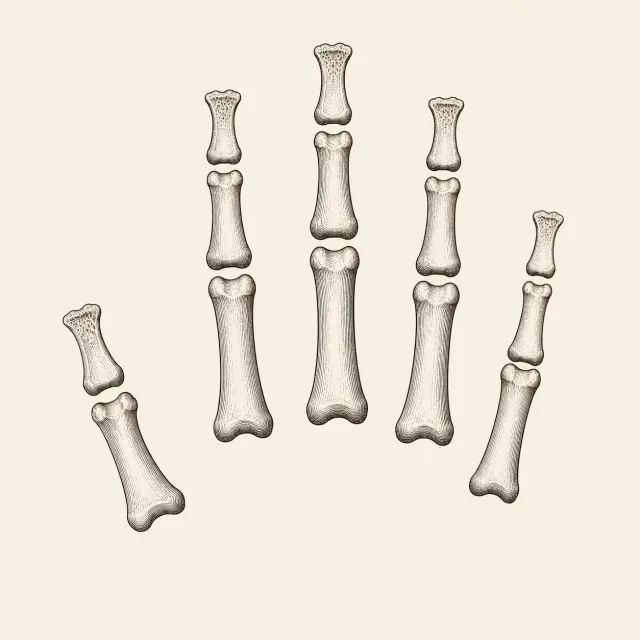
An examination brings you up to four new specimens, along with anything due for another look, and it is over as soon as the new ones are filed, unless you would rather carry on. Every bone arrives as an engraved plate with its own case file, and when the examination closes the lab leaves you a field note, one fact about one of them that you did not have that morning.
Progress is measured in days rather than in a single sitting, so a small session most days does more than a long one on Sunday. There is a lab streak to keep if that appeals, and if it breaks, nothing you have learned breaks with it. Come back after a week away and there is no backlog waiting, just the next few specimens on the desk.
Start learningBegin with four bones. It’s free, and you don’t need an account.
If you’d like the details, see how the memory system works.
The maker
The disclosure
How The Bone Room is made
The Bone Room is built with the help of AI, and I review it. Here is who did what.
- AI helped with
- The first drafts of the anatomy, and the specimen artwork.
- I checked
- The terminology, the counts, the curriculum, the learning rules, the design, and every word on this site.
- References
OpenStax Anatomy and Physiology 2e, StatPearls on the NCBI Bookshelf and FIPAT Terminologia Anatomica. All 67 of the 67 entries record the section they were checked against, and the 146 field notes cite 38 sources between them.
Show all 38 sources
OpenStax Anatomy & Physiology 2e: 8.1 The Pectoral Girdle · 8.2 Bones of the Upper Limb · 8.4 Bones of the Lower Limb · 7.4 The Thoracic Cage · 7.3 The Vertebral Column · 8.3 The Pelvic Girdle and Pelvis · 7.2 The Skull
NCBI Bookshelf / StatPearls: Anatomy, Shoulder and Upper Limb, Clavicle · Anatomy, Thorax, Scapula · Anatomy, Shoulder and Upper Limb, Humerus · Anatomy, Shoulder and Upper Limb, Ulnar Nerve · Radius and Ulnar Shaft Fractures, anatomy section · Anatomy, Bony Pelvis and Lower Limb, Knee Patella · Anatomy, Bony Pelvis and Lower Limb, Fibula · Anatomy, Shoulder and Upper Limb, Hand Bones · Anatomy, Bone Markings · Anatomy, Bony Pelvis and Lower Limb, Foot · Anatomy, Bony Pelvis and Lower Limb, Foot Talus · Anatomy, Bony Pelvis and Lower Limb, Calcaneus · Anatomy, Head and Neck, Hyoid Bone · Anatomy, Head and Neck, Eye Nasolacrimal · Physiology, Nasal · Imaging of the Pituitary Gland · Anatomy, Head and Neck, Ethmoid Bone · Anatomy, Head and Neck, Foramen Magnum · Anatomy, Back, Cervical Vertebrae · Anatomy, Thorax, Wall Movements · Phalanx Fractures of the Hand, anatomy section · Finger Dislocation, anatomy section · Anatomy, Shoulder and Upper Limb, Hand Carpal Bones · Anatomy, Bony Pelvis and Lower Limb, Foot Bones · Anatomy, Bony Pelvis and Lower Limb, Foot Joints · Hammertoe, anatomical structures section · Anatomy, Bony Pelvis and Lower Limb, Foot Muscles
NIH Curriculum Supplement: Information about Hearing, Communication, and Understanding
OpenStax Biology 2e: 36.4 Hearing and Vestibular Sensation
NCBI Bookshelf: Wrist and Hand, Musculoskeletal Diseases 2021–2024
- Still planned
- A review of the specimen illustrations by a qualified anatomist.
The plates were drawn by AI, then reviewed by hand against written anatomical descriptions and rejected and regenerated when they were wrong, but they have not yet been reviewed by a qualified anatomist. Until they have, treat a plate as a good likeness rather than a reference image. Where the references disagreed, I followed standard anatomical usage.