TheBone RoomStart learning

The bones

The bones of the ear

The smallest bone in the human body is the stapes, a stirrup-shaped bone in the middle ear. It sits beside the malleus and incus, whose names mean hammer and anvil, and the three pass vibrations from the eardrum toward the inner ear.

There is one set in each ear, so the body has six auditory ossicles altogether. They are easy to lose in the usual head count because the adult skull has 22 bones, while the ossicles and hyoid are seven additional bones associated with the head. Add those seven and the wider head count becomes 29. The Bone Room keeps the ear bones on this page, but they still belong to the 80 bones of the axial skeleton and count toward the same 206.

Their names make a pleasing little chain. The handle of the malleus attaches to the eardrum, its head meets the incus, and the incus meets the stapes. The footplate of that final, tiny stirrup presses at the oval window of the inner ear. All three begin turning to bone before birth, although the often repeated claim that they are already full adult size at birth is more than the sources used here establish.

These 3 entries account for 6 of the 206.How the 206 is counted.

On this page: Try one · Questions · The specimens · Nearby

01 · Try one

Can you name this one?

This is how the lab asks. A bone you name today comes back a week later to be named again, and that is how it stays known.

Identify the specimen

First of the three tiny middle-ear bones: its handle is fixed to the eardrum and passes vibration along the chain.

2 (one per ear)

malleus
plural: mallei
“hammer”
In the body2 (one per ear)
DescriptionFirst of the three tiny middle-ear bones: its handle is fixed to the eardrum and passes vibration along the chain.
Field noteThe first of the three smallest bones in the body. Fixed to the eardrum, it starts the chain that carries vibration across the middle ear.

02 · Questions

The questions people ask about these bones.

What is the smallest bone in the body?

The stapes. It is the third bone in the middle ear's chain of ossicles and has a head, two legs, and a footplate, giving it the shape of a stirrup. StatPearls, Ear Ossicles

What do the three ear bones do?

They carry vibration across the middle ear. The malleus moves with the eardrum, the incus passes that movement along, and the stapes presses against the oval window to move fluid in the inner ear. OpenStax, Sensory Perception

Why are they called the hammer, anvil, and stirrup?

Malleus, incus, and stapes are Latin names that roughly translate to hammer, anvil, and stirrup. Each name describes the bone's shape. OpenStax, Sensory Perception

03 · The specimens

What each one is called, and how it is counted.

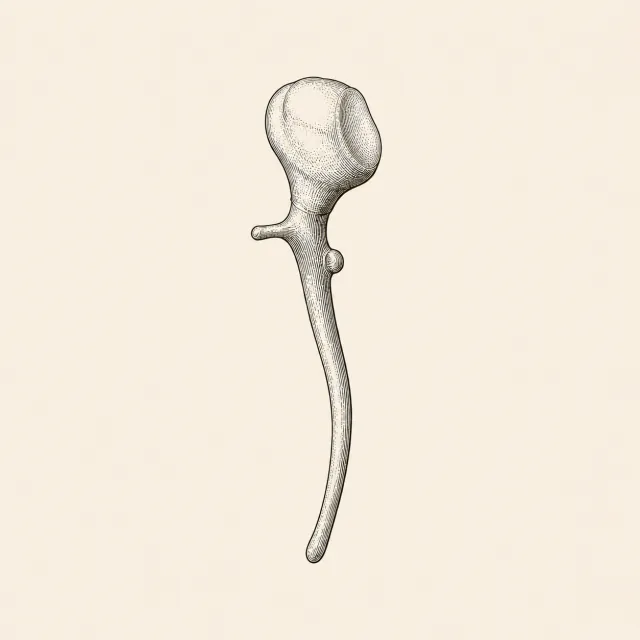
malleus

plural: mallei
“hammer”
malleus2 (one per ear)
In the body2 (one per ear)
DescriptionFirst of the three tiny middle-ear bones: its handle is fixed to the eardrum and passes vibration along the chain.
Field noteThe first of the three smallest bones in the body. Fixed to the eardrum, it starts the chain that carries vibration across the middle ear.
On record
  • The malleus is the first bone in the hearing chain and is attached to the eardrum. NIH
  • An adult malleus is only about eight millimetres long. NIH

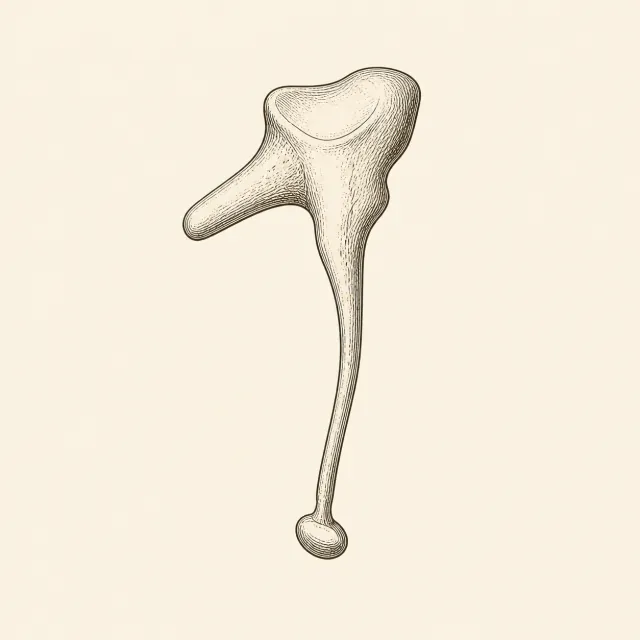
incus

plural: incudes
“anvil”
incus2 (one per ear)
In the body2 (one per ear)
DescriptionThe middle link of the three ear bones, taking vibration from the first and handing it to the last.
Field noteMiddle child of the ear. The three bones work as a lever chain, passing vibration from the eardrum onward to the inner ear.
On record
  • The incus is the middle bridge of the ossicle chain, linking the malleus to the stapes. NIH
  • At roughly nine millimetres, the tiny incus can be slightly longer than the malleus. NIH

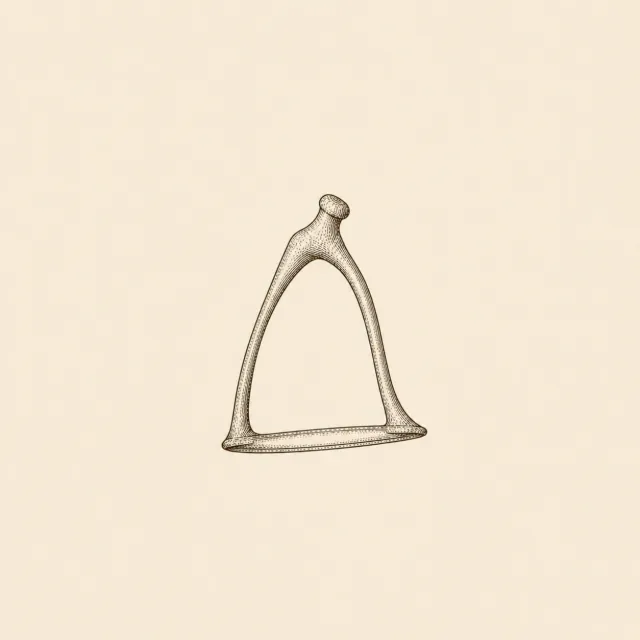
stapes

plural: stapedes
“stirrup”
stapes2 (one per ear)
In the body2 (one per ear)
DescriptionLast of the three ear bones; its oval footplate presses against the doorway of the inner ear.
Field noteThe smallest bone in the human body, and the last link in the chain: whatever it passes on is what the inner ear finally receives.
On record
  • At about three millimetres long, the stapes is the smallest bone in the human body. NIH
  • The stapes presses its footplate against the oval window, turning bone vibration into pressure waves in inner-ear fluid. OpenStax Biology 36.4

04 · Learn them

Reading them is not the same as knowing them.

In the lab these are Case 09, The Auditory Ossicles, on the Scholar track, which opens once the Explorer case files are done. The lab starts with the big bones, so the ear comes later.

It introduces bones a few at a time, asks where they are, and comes back days later to check they stayed.

Start with the big bonesBegin with four bones. It’s free, and you don’t need an account.

Nearby: arm and shoulder · leg · rib cage · spine and pelvis · hand · wrist · foot and ankle · skull · all nine